
Description
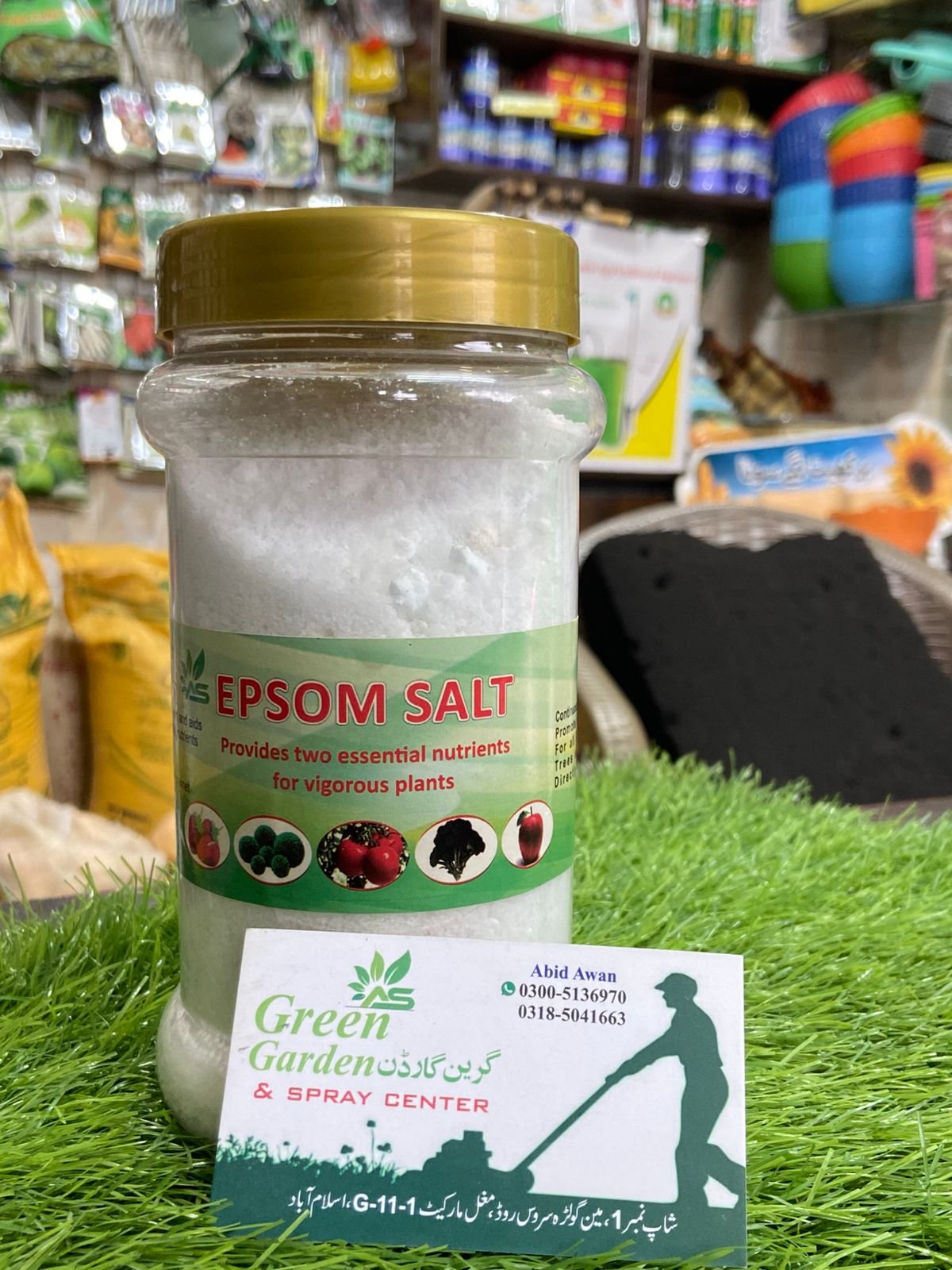
Epsom salt (magnesium sulfate) provides essential magnesium and sulfur to plants, helping to promote healthy growth, increase chlorophyll production, and aid in nutrient absorption. You can use it by mixing 1-2 tablespoons in a gallon of water and applying it to the soil at the plant’s base or as a foliar spray every 4-6 weeks. It’s beneficial for plants with yellowing leaves or slow growth and is especially useful for container plants and certain vegetables like tomatoes and peppers. However, only use it if your plants have a magnesium deficiency, as too much can harm the plant.
Benefits of Epsom Salt for Plants
-
- Provides Essential Nutrients: Epsom salt is a source of magnesium and sulfur, vital for plant health.
- Promotes Chlorophyll Production: Magnesium aids in chlorophyll formation, leading to greener, healthier leaves.
- Enhances Nutrient Absorption: It helps plants absorb other essential nutrients like phosphorus and nitrogen.
- Supports Growth and Flowering: Epsom salt encourages bushier growth and more abundant flowers and fruits.
- Provides Essential Nutrients: Epsom salt is a source of magnesium and sulfur, vital for plant health.
- Aids Seed Germination: Magnesium strengthens cell walls, which is beneficial for new seedlings.
- Good for Container Plants: It helps address nutrient deficiencies that can occur in pots as plants consume nutrients quickly.
How to Use Epsom Salt
- For Soil Application (Root Feed): Mix 1 to 2 tablespoons of Epsom salt per gallon of water. Water the base of the plant with the solution, ensuring it reaches the roots.
- For Foliar Spray (Leaf Feed): Dissolve a smaller amount, such as ½ teaspoon per liter of water. Spray both sides of the leaves in the early morning or evening to avoid hot sun.
- Frequency: Apply the solution every 4 to 6 weeks.
When to Use Epsom Salt
-
Signs of Deficiency:Use it for plants showing signs of yellowing leaves, particularly between the veins.
-
Heavy Feeders:Plants like tomatoes, cucumbers, and leafy greens benefit from its regular application.
-
Container Growing:It’s especially helpful for plants in containers that are prone to nutrient depletion.
Important Considerations
-
Not a Cure-All:Epsom salt should not be used for every plant problem. It’s most effective when there’s a genuine magnesium deficiency.
-
Monitor Your Soil:If your soil already contains adequate magnesium and sulfur, or if you use a fertilizer that already has these nutrients, you may not need Epsom salt.
-
Use Horticulture-Grade:Always use horticulture-grade Epsom salt to ensure it’s clean and safe for plants, not the type used for baths.
-
Wash Produce Thoroughly:If using on edible plants, always wash produce thoroughly before consumption.


Reviews
There are no reviews yet.